
When construction crews hit hard rock, timeline delays and budget overruns follow quickly. Controlled drilling and blasting is the most efficient method for mass rock fragmentation, trenching, and site preparation. Below, explore our engineering guides or review key FAQs to evaluate your site needs.
Drilling & Blasting 101
Commercial Site Preparation & Rock Fragmentation
Technical insights, safety protocols, and cost considerations for commercial site developers, civil contractors, and project estimators.
Articles and Engineering Guides
Frequently Asked Technical Questions
Common engineering, safety, and operational questions regarding commercial rock excavation and controlled blasting.
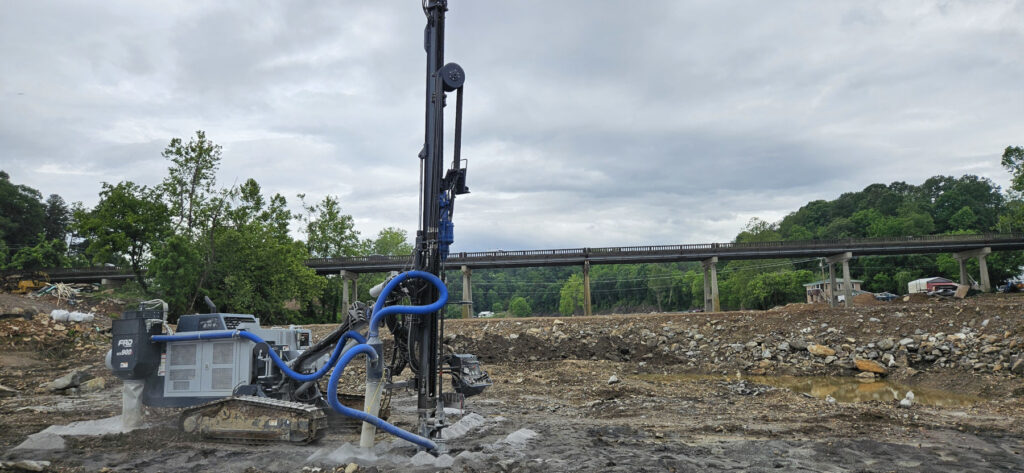
Controlled drilling and blasting is a multi-step engineering process designed to fragment solid rock into manageable sizes for site excavation:
- Drill Pattern Design: Precision rigs drill a calculated grid of blast holes based on rock density, depth, and proximity to structures.
- Loading & Initiation: Specialized commercial explosives are loaded into the holes along with electronic or non-electric delay detonators.
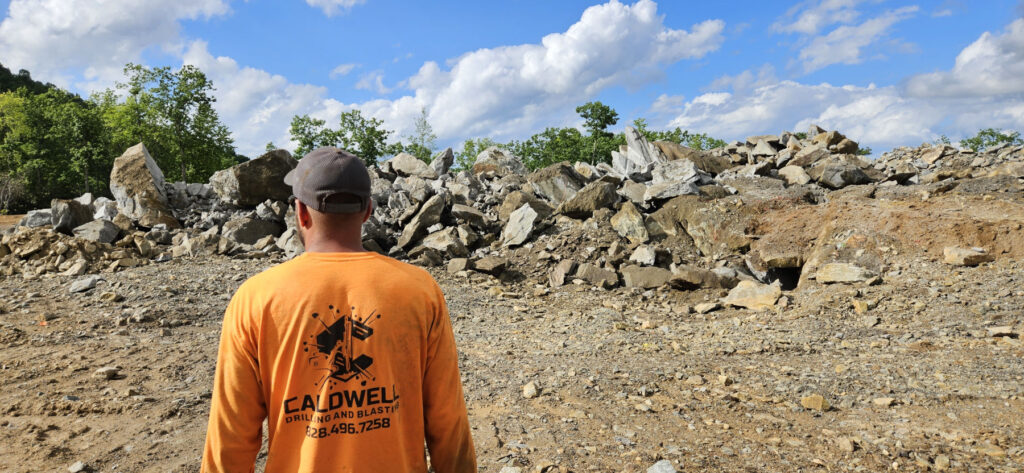
- Controlled Detonation: The blast is executed in millisecond delays, directing energy inward to shatter the rock mass while controlling flyrock and ground vibration.
While mechanical breaking (hoe-ramming) works well for small volumes or soft, fractured rock, blasting becomes necessary when:
- Rock Volume Exceeds ~300-500 Cubic Yards: Ramming large rock masses causes exponential delays and severe equipment wear.
- High Rock Compressive Strength: Unfractured granite, blue rock, or dense limestone (10,000+ PSI) renders hydraulic hammers inefficient.
- Tight Project Schedules: Blasting fractures hundreds of yards of rock in a single millisecond shot versus days of continuous mechanical hammering.
Modern controlled blasting uses strict engineering controls to safely operate inches from active utilities, roads, and occupied buildings:
- Seismograph Monitoring: Calibrated ground vibration and air-overpressure monitors measure Peak Particle Velocity (PPV) in real time to ensure compliance with state and local limits.
- Blasting Mats: Heavy woven wire or rubber mats are placed over the shot area to completely contain flyrock.
- Micro-Delay Sequencing: Dividing the charge into millisecond delays reduces the total energy released at any single instant, eliminating damaging shockwaves.
In ultra-sensitive environments where conventional blasting is restricted by local ordinances or immediate structural proximity, Caldwell provides alternative rock breaking solutions:
- Chemical Expansive Grouts: Non-explosive demolition agents are poured into drilled holes, expanding over several hours to crack rock without any vibration or sound.
- Heavy Mechanical Splitting & Hoe-Ramming: Utilizing targeted relief drilling paired with high-tonnage hydraulic rams to trim rock edges cleanly.
When Is Blasting Needed?
If your job site has solid rock and you need to dig, build, or grade, blasting might be the most effective way to move forward. Some of the most common projects we help with include:
- Foundations and basements
- Road and driveway construction
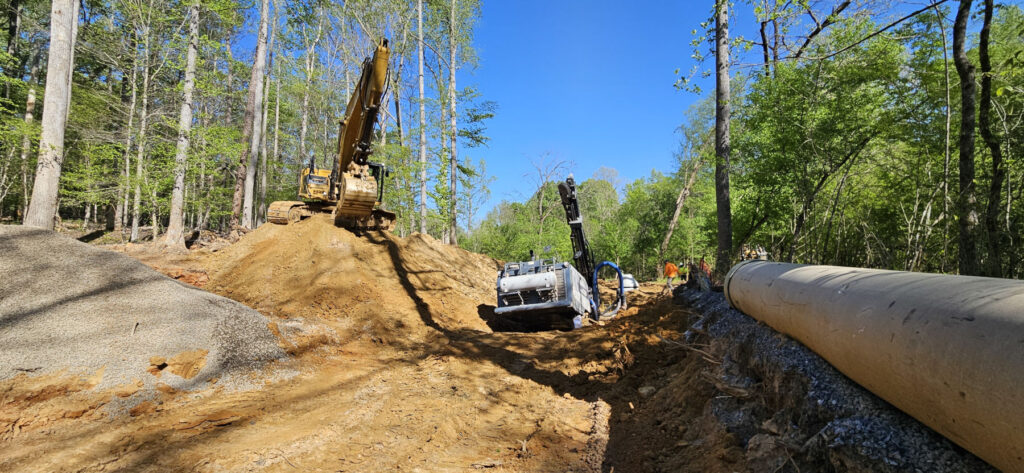
- Utility trenching
- Site preparation
Let’s Talk About Your Project
At Caldwell Drilling and Blasting, we help clients across North Carolina, South Carolina, Tennessee, Virginia, and Georgia complete projects that involve hard rock. If you’re not sure whether blasting is needed, we’re happy to walk the site and talk through your options.
Contact us today to learn more about how we work and what the process would look like for your project.